Posts Tagged "Quilting"

Design Wall Monday

On Lime Green Kitchen today:

Dilly Sweet Carrots – they’re different and they’re good!

What’s on your design wall?

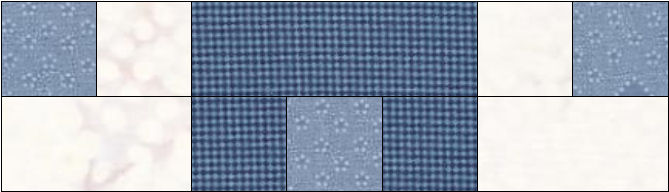
Peaches and Dreams is on my lineup for workshops this year and the first time I’m teaching it is in March.  Since the one I made went to Chad’s friend for a wedding gift, I’m making another one.  The original one is about 90″ x 104″ but the one I’m making now is going to be about 60″ x 80″.  It will travel around with me and I wouldn’t have minded making it even smaller but when I’m finished with it being in my trunk show, I can donate it so . . 60″ x 80″ is what it will be.  This is where I am with it right now.

What’s on your design wall?  Please share a link to a specific blog post . . not your main blog address.  Links to main blogs are deleted!

17 comments

Week 51 Stash Report

There was an addition to my stash this week . . even though I didn’t do it.  I promise . . I didn’t do anything . . I just opened the door when the UPS man rang the doorbell!

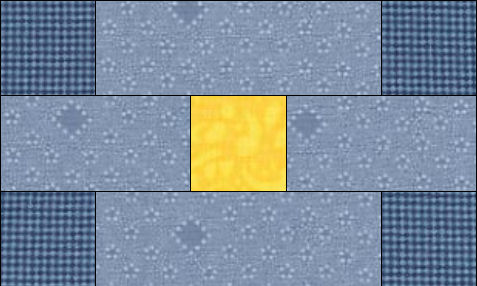
A friend sent me the cutest kit to make a chicken quilt.  It’s a great quilt and it will be perfect for the chicken fabric I’ve been dying to use for a backing.  She also sent a big piece of fabric with eggs — brown and greenish blue eggs . . just like I get from my chickens! Puts me back into negative numbers again but I haven’t counted the fabric for the four patches (which were on my design wall last week and are still on my design wall), so I will end the year in the positive . . I hope!

Used this Week:  0 yards
Used year to Date: 456.50 yards
Added this Week: 10 yards
Added Year to Date: 457 yards
Net Used for 2009:  -5.50 yards

Anyone else want to share a stash report?

17 comments

Storing the Stash

A reader asked in the comments yesterday about storing the fabric.  There are so many different ways to store the stash fabric.  In the trunk of the car, in the freezer, under the mattress .. anywhere your husband won’t find it!  :)

Please share how you store your fabric. Or, share how you wish you stored your fabric.  Share what you’ve tried or seen that works great or what you’ve tried or seen that doesn’t work so well.  What absolutely doesn’t work for some may work perfectly for others.

My stash has been stored in everything from Rubbermaid type boxes, to a three shelf bookcase, to a linen closet to a walk-in closet.  My guess is that we’re all doing the best we can under our circumstances.  While we want to make our fabrics as accessible as possible, I pretty much just take the space I’m given and use it as best I can.

My current fabric storage setup, and probably my most favorite so far are shelving units that we got at Sam’s Club.

stash2 I like this setup because the shelves are deep and I have other things stored behind the fabric.  There’s more fabric behind some stacks; there are boxes of varying sizes behind some stacks; hidden suprises behind others.  Because the stacks are short, the fabric doesn’t topple over too easily.  I can see pretty much everything I have and I can get to it easily.

My fabric is stored in the basement so there are no problems with food odors and dust from the tons of baby powder and flour that I use upstairs.  Don’t try to figure that out — baby powder in the bathroom; flour in the kitchen!  :) Since our basement is a walkout and part of our living area, it’s heated and cooled so I don’t have to worry about humidity issues.

With the fabric being in the basement, there are no windows where direct sunlight can reach my fabric so I don’t mind that it’s on open shelves.  If my fabric was stored in a room with windows and sunlight, I’d probably prefer to have the fabric in a closet with doors or in storage containers.

Think about what works for you when re-organizing  your fabric.  Not only does the fabric need to be easy to get to, but it also need to be easy for you to put it away.

In a previous house, I had the fabric stored in a walk-in closet in one of the bedrooms but I sewed in the family room.  I was constantly bringing fabric into that room and rarely taking it back to the closet.  Having my fabric right next to my cutting table now helps me get it back onto the shelves when I’m finished using it.

Think about possible problems such as sunlight, humidity, bugs and work around any such issues.  If your fabric is stored in multiple locations (hall closet, bedroom closet, under bed type boxes, etc.), you might keep a notebook or spreadsheet as to where you have things.  Like . . reds in hall closet, blues under bed.

Do the best you can with what you have but don’t stress about it!  Get the stash organized though because it’s just a bit less than 2 weeks til the real stashbusting begins!  :)

sig

35 comments

Putting the Stash to Work

2010 is coming . . ready or not!  2010 is the year that I’m going to use my stash like you won’t believe.  If I use anywhere near my goal, my actions will be historic.  Future generations of quilters will talk about me . . the lady who used all those yards of fabric back in 2010!  OK . . maybe not but I’m giving it my best shot.  The only thing that will stop me from reaching my goal would be some unforeseen happening.  Let’s just hope there are no such happenings at our house in 2010.

From the responses to the question posed yesterday, it’s obvious that all of our stashes are different.  Some are comprised of small amounts of yardage, some are comprised of fat quarters or smaller pieces, many are comprised of a combination of all sizes of fabrics.

To effectively use our stashes, I believe we have to intimately know our stash . . know what types of fabrics are in there and what type patterns work best with our own stash.

My stash for instance, as most everyone knows, is almost totally tone on tone fabrics.  I love those! I think they’re timeless.  You can look at a Moda Marble that I bought in 1996 and it looks just like a Moda Marble I bought yesterday (but really . . I didn’t buy a Moda Marble yesterday.  I didn’t buy any fabric yesterday . . really!)  Tone on tones work for me.  Florals and plaids do not work for me . . at all!  Tone on tones may no work for you . . . that’s ok!  So long as your stash works for you, that’s all that matters.

When you see a pattern . . a free pattern on the internet, a pattern in a book, a single pattern . . that you like, what’s the first thing you think?  If you want to make that pattern, do you:

  1. Try to choose the exact same or similar fabrics so you can make your top just as shown?
  2. Go home and shop your stash to make the quilt using what you have at home, even if it means you have to tweak the pattern a bit to fit what you have at home?

My guess is if you’re thinking along the lines of option #2, you may use enough stash fabric to be in the quilt history books with me!  :)

Here’s an example.  This is the Saratoga Lights quilt just as I showed earlier.  One navy, one gold, one red, one light background and one darker background fabric.

QuiltHere’s the same drawing where I used multiple gold, red and navy fabrics.  I still used one light background and one darker background fabric.

SL

Hardly makes any difference in the overall look of the pattern by using a mixture of fabrics, but it makes a difference . . especially in my stash reports, if I made my stash work for me versus buying the “perfect” fabrics to work in this quilt.

In 2010, if you’re wanting to bust the stash, when you want to make any top or pillowcase or backing or whatever . . see what’s in you stash!  Be absolutely sure there’s nothng in there that will work for you before buying new fabric.

Remember . . I’m not saying we don’t want to support the quilt shops!  We want to see if we can use what we have in our stash before we buy.  What if I had everything needed to make this quilt but had nothing that would work for the darker background.  If I really wanted to make this quilt, I wouldn’t hesitate to buy the 1-1/2 yards of darker background fabric needed.

Is your stash going to work for you in 2010 or is it going to sit and collect dust, and then you’re going to feel like you can’t buy fabric because you have so much fabric already?

sig

15 comments

Making Perfect Blocks

First, I’m adding the border posts to the side bar under “Free Patterns & Projects”.  Once I’ve covered all the topics I’m going to cover, I’ll post several charts that can be printed.

I’m not saying my blocks are perfect (they’re usually NOT!)  but I do know how to get real close to perfect.  Do you realize that being off just 1/16th of an inch can make a big difference?  Say you have a nine patch block that’s supposed to measure 9″ finished.  With two seams, each of those seams having two pieces of fabric, if either your seam allowance or your cutting is off by even 1/16th of an inch .. that’s 4/16th (or 1/4″) for your seam problems and another 1/4″ for any small cutting errors.  That’s 1/2″!  Add another 2/16″ for the two edges that might have a cutting problem but no seam!  Just a very, very small error can lead to over 1/4″ error in a simple 9 patch block.  Think of blocks that have 8 or 10 or 12 pieces across the width of the block!  Just a little bit of error compounds itself.

Here are some tips if you’re having problems with your blocks being the size you need for them to be.

  1. Be sure you’re cutting accurately.  Check your rulers.  After time, I’ve found that some of the edges just wear away.  If you feel you’re not getting accurate cuts, take some scrap fabric and use several different rulers to cut squares — make them all the same measurement but use different rulers.  Stack those squares on top of each other.  Are they all exactly the same?  If not, either you have a ruler that’s off or you’re not being careful enough with your cutting.
  2. Make sure you’re getting a perfect 1/4″ seam.  Cut two squares that are 2″.  Make sure they’re exactly perfect.  Sew them together, using a 1/4″ seam.  Press and measure.  This little practice piece should now measure 3-1/2″.  Does it?  If not, try different methods for getting that perfect 1/4″ seam allowance til you get it right.  Not all 1/4″ feet are created equally.  If you have a problem, it can be as simple as where your needle is hitting the fabric.  Maybe the position of your needle is off by just a teeny bit but it adds up.  Figure out what’s right for your machine!
  3. Be careful when you press.  I find that some fabrics tend to stretch and distort more so than others.  Fabrics vary from one brand to another and even different fabrics from one company can vary in weight and “stretchability”.  Using something like Mary Ellen’s Best Press can help; steam or not steam is a personal preference.
  4. Thread can make a difference.  Think that every seam has 2 layers of thread.  If you’re using a thicker thread like Star Cotton, which is “size 50″, which must be a “TEX weight”, it’s going to result in more bulk than using something finer like Aurifil or Superior Master Piece.  There’s a great article on thread weight at Superior’s site. Thread can make a big difference when you have star points coming together where there are lots of seams in one spot.

If you’re having problems getting your blocks close to perfect, make a few simple blocks and change whatever you can until you get it right.  You can get very close to perfect if that’s your goal.  While I don’t worry a whole lot about getting my blocks perfect, if I want my sashing to fit and my pieced borders to fit, then it is important to get as close to perfect as I can.

And, while we’re on the subject of perfect, quilting is supposed to be fun.   If quilting is stressful for you, something just isn’t right!  Just take the time to figure out what’s causing your stress and resolve it.  Wasn’t that easy?  No more stress! :)   One thing I always tell those in my classes — this isn’t brain surgery.  If you mess up in your quilting process, no matter how badly you mess up, no one is going to die!  No one is going to be permanently disabled or scarred for life.  It’s fabric!  Yes, it’s expensive and yes, you may be 90% finished with a top and you may ruin enough that you can’t finish the quilt as intended.  There’s always something you can do to salvage it.  Make it smaller, try to find more fabric, improvise and use a different fabric but do not stress about quilting!  We have enough in life to stress about . . let quilting be your de-stresser (is that a word).

sig

11 comments